Navigating the iGaming landscape requires a platform that balances accessibility with robust functionality. Lets Lucky Casino, accessible at https://letslucky.biz/, positions itself within this space, offering a digital casino experience. This technical whitepaper provides an exhaustive, neutral analysis of the platform’s operational framework, from initial access and financial mechanics to security protocols and user strategy. We will dissect the core processes, including the critical lets lucky casino login sequence, to equip you with a comprehensive understanding of the system.
Pre-Engagement Checklist: Due Diligence
Before initiating any interaction with the Lets Lucky platform, a systematic review of the following points is advised.
- Jurisdictional Legality: Confirm that online casino gambling is legal in your country/state and that Lets Lucky accepts players from your region.
- License Verification: The platform operates under a Curaçao eGaming license (Master Gaming License). Verify its current status on the Curaçao Gaming Control Board website.
- Financial Preparedness: Decide on a strict deposit budget. Ensure you have access to preferred payment methods (e.g., cryptocurrency wallets, cards).
- Technical Readiness: Use an updated browser (Chrome, Firefox) or device. A stable internet connection is mandatory for real-time play.
- Documentation: Have a government-issued ID and a recent proof of address (utility bill) ready for potential account verification (KYC).
Architectural Blueprint: Account Creation & Authentication
The gateway to the Lets Lucky ecosystem is the account registration and subsequent authentication (login) process. This is a multi-step protocol designed for security and user profiling.
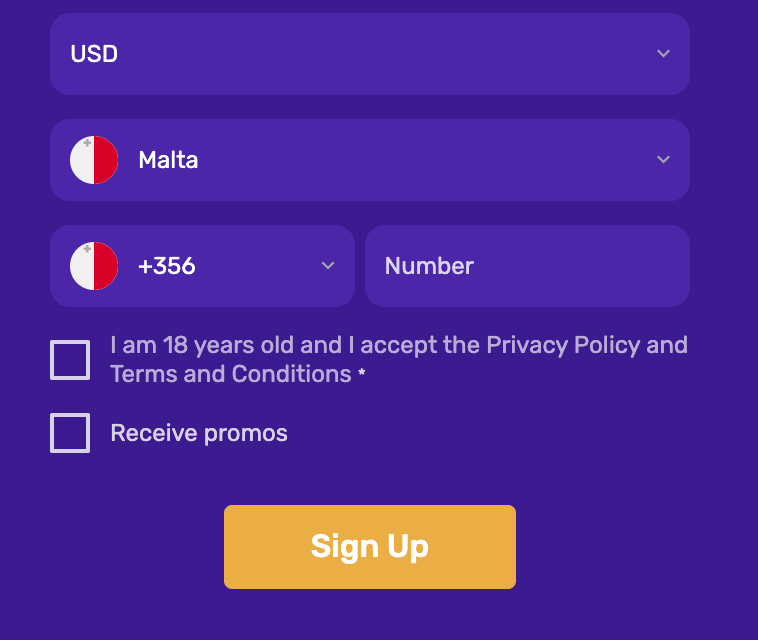
- Initialization: Navigate to the Lets Lucky homepage and click the ‘Registration’ button, typically prominent in the header.
- Data Layer Input: The form requires unique identifiers: email address, a self-generated password (employ high entropy: mix case, numbers, symbols), and currency selection (often permanent).
- Contractual Agreement: You must affirm you are of legal age and agree to the platform’s Terms & Conditions and Privacy Policy. This is a legally binding step.
- Account Activation: Complete the form submission. An activation link may be sent to your email. Clicking it finalizes the creation of your user profile in the Lets Lucky database.
- Authentication (Login): For subsequent access, use the lets lucky casino login portal. Input your registered email and password. The system hashes your password input and compares it to the stored hash. A match grants session access; a mismatch triggers an error. Always log out from shared devices.
Mathematical Modeling: Bonus Economics & Wagering Scenarios
Bonuses are financial instruments with attached liabilities (wagering requirements). Understanding the underlying math is crucial to evaluate their true value. Let’s model a common 100% deposit match up to $200 with a 40x (D+B) wagering requirement.
Scenario Variables:
– Deposit (D) = $100
– Bonus (B) = $100 (100% of D)
– Wagering Requirement (WR) = 40 x (D + B) = 40 x $200 = $8,000
– Game Contribution (GC): Assume slots contribute 100%, table games 10%.
Calculation 1: Theoretical Playthrough Cost.
If you play only slots (GC=100%), you must wager the full $8,000. The theoretical loss, based on House Edge (RTP), is Expected Loss = Total Wager * House Edge. For a 96% RTP slot (4% edge), Expected Loss = $8,000 * 0.04 = $320. Since your total capital was $200, this bonus carries high risk.
Calculation 2: Effective Bonus Value.
If you wager on blackjack (GC=10%, House Edge ~0.5%), only 10% of each bet counts. Effective WR becomes $8,000 / 0.10 = $80,000 to wager. Expected Loss = $80,000 * 0.005 = $400. This makes the bonus virtually impossible to convert profitably.
Conclusion: High-multiplier wagering on bonuses tied to deposit + bonus amounts significantly increases the financial commitment required. Always calculate the ‘Effective Wagering’ amount based on your game of choice.
Financial Layer Analysis: Transactions & Limits
The platform’s financial engine supports various payment rails. Transaction limits and processing times are critical system parameters.
| Method Type | Examples | Deposit Processing | Withdrawal Processing* | Typical Limits (May Vary) | Technical Notes |
|---|---|---|---|---|---|
| Cryptocurrency | Bitcoin (BTC), Ethereum (ETH), Litecoin (LTC), Tether (USDT) | Instant (Network Confirmations) | 1-24 hours | Min: $10 equivalent; Max: Variable | Uses blockchain. Irreversible. Wallet address must be exact. |
| Credit/Debit Cards | Visa, Mastercard | Instant | 1-3 banking days | Min: $10; Max: $5000 per transaction | Subject to bank policies; may require 3D Secure. |
| E-Wallets | Skrill, Neteller | Instant | Up to 24 hours | Min: $10; Max: $5000 per transaction | Requires a pre-funded external account. |
| Bank Transfer | Direct Bank Wire | 1-5 business days | 3-7 business days | Min: $50; Max: $10,000+ | Slowest method, may involve intermediary bank fees. |
*Withdrawals are universally pending a KYC verification check and any bonus wagering completion. The first withdrawal may take longest.
Security & Compliance Protocols
Lets Lucky’s operational security rests on several pillars. The Curaçao license provides a regulatory baseline, mandating anti-money laundering (AML) procedures. The platform likely employs 128/256-bit SSL encryption for all data in transit, which is standard for protecting lets lucky casino login credentials and financial details. The mandatory KYC (Know Your Customer) process is a critical compliance checkpoint; withdrawal requests will be halted until submitted documents (ID, proof of payment method, proof of address) are verified. This is a non-negotiable industry standard to prevent fraud.
System Diagnostics: Troubleshooting Common Failures
When system interaction fails, a logical diagnostic tree should be followed.
Issue 1: Lets Lucky Casino Login Failure.
– Symptom: “Invalid email or password” error.
– Diagnosis: Input error, caps lock enabled, or cached incorrect password.
– Resolution: Use the ‘Forgot Password’ function to force a reset email. Manually type credentials, ensuring case sensitivity. Clear browser cache/cookies.
Issue 2: Game Loading Error/Blank Screen.
– Symptom: Game does not initialize, spins forever, or displays a black rectangle.
– Diagnosis: Blocked JavaScript, outdated Adobe Flash (if used), poor connectivity, or regional game restriction.
– Resolution: Enable JavaScript for the domain. Ensure HTML5 compatibility. Check internet speed. Use a wired connection if possible. Contact support to confirm game availability.
Issue 3: Delayed or Rejected Withdrawal.
– Symptom: Withdrawal pending beyond stated timeframe or status changed to ‘Cancelled’.
– Diagnosis: Incomplete KYC, unfulfilled bonus wagering, or payment method verification mismatch.
– Resolution: Proactively submit all KYC documents before first withdrawal. Triple-check bonus T&Cs. Ensure the withdrawal method matches the deposit method (common rule). Contact support with your username and transaction ID.
Extended FAQ: Technical & Operational Queries
Q1: What is the average RTP (Return to Player) for slots on Lets Lucky?
A: RTP is game-specific, not platform-specific. Most video slots range from 94% to 97%. You must check the ‘Paytable’ or ‘Game Info’ section of each individual slot to see its certified RTP percentage.
Q2: Does Lets Lucky have a provably fair system for its games?
A: This is primarily a feature of dedicated crypto casinos and blockchain-based games. Lets Lucky uses games from major software providers (like Pragmatic Play, Evolution) whose outcomes are determined by RNGs (Random Number Generators) certified by independent auditing firms (e.g., iTech Labs, GLI). It is unlikely to offer a client-verifiable provably fair mechanism.
Q3: Can I use a VPN to access Lets Lucky if it’s blocked in my country?
A: Technically possible, but strictly against Terms of Service. If detected during KYC (via ID/payment method geolocation), your account will be frozen and all funds confiscated. The risk is extremely high and not recommended.
Q4: How are random outcomes generated, and can they be audited?
A: As mentioned, licensed game providers use hardware- and software-based RNGs that generate thousands of numbers per second. The outcome at the moment of your spin is mapped to a game result. These RNGs and their algorithms are routinely tested and certified by third-party auditors. Public audit reports are usually available on the auditor’s or provider’s website.
Q5: What happens to my account balance if I become inactive?
A: Platforms typically have a ‘Dormant Account’ policy outlined in their T&Cs. After a period of inactivity (e.g., 12-24 months), they may start charging a monthly administrative fee, which will deplete the balance, potentially to zero. Always withdraw funds before taking a long break.
Q6: Is two-factor authentication (2FA) available for my Lets Lucky account?
A: This is an advanced security feature not universally adopted by all casinos. You must check the account security settings within your Lets Lucky profile or contact customer support directly to inquire if 2FA via an app (like Google Authenticator) or SMS is supported.
Q7: What is the procedure if I suspect a game result is incorrect due to a software glitch?
A: 1) Immediately take a screenshot/video of the result and your game history. 2) Do not continue playing that game session. 3) Contact support immediately with evidence, your username, game name, and timestamp. The game provider’s server logs will be checked against your claim. Disputes are resolved based on the server log, which is considered the authoritative record.
Q8: Are there API integrations available for Lets Lucky?
A: No. Commercial casino platforms do not offer public APIs for individual player integration. They have backend APIs for game providers and payment processors, but these are not accessible to end-users.
Q9: How does the platform handle ‘loss limit’ or ‘reality check’ features?
A: Responsible gambling tools are a licensing requirement. In your account settings, you should find options to set deposit limits (daily, weekly, monthly), loss limits, session time limits, and self-exclusion. These are critical tools for bankroll management and harm reduction.
Q10: What is the cache and cookie policy, and how does it affect my session?
A> The site uses session cookies to maintain your login state and game progress. Clearing cookies mid-session will log you out. Cache stores visual elements for faster loading. Corruption can cause display issues. A periodic full cache/cookie clear (followed by a fresh lets lucky casino login) can resolve many minor technical glitches.
Conclusion & Strategic Summary
Lets Lucky Casino operates as a standard online gaming portal within the Curaçao-licensed ecosystem. Its technical architecture follows common patterns: a web-based frontend, a secure authentication layer for the lets lucky login process, integration with multiple payment gateways, and a game portfolio powered by established RNG-certified providers. The strategic takeaway is that success hinges on user discipline: performing due diligence pre-registration, understanding the mathematical weight of bonus terms, employing responsible gambling tools, and maintaining organized records for KYC and troubleshooting. The platform is a tool; its utility and safety are ultimately governed by the user’s informed and cautious application of its systems.